Assessors can smell generated boilerplate. GrantSpark asks for the figures, partners, and evidence only you know — then builds the section around your answers.
Draft your first section
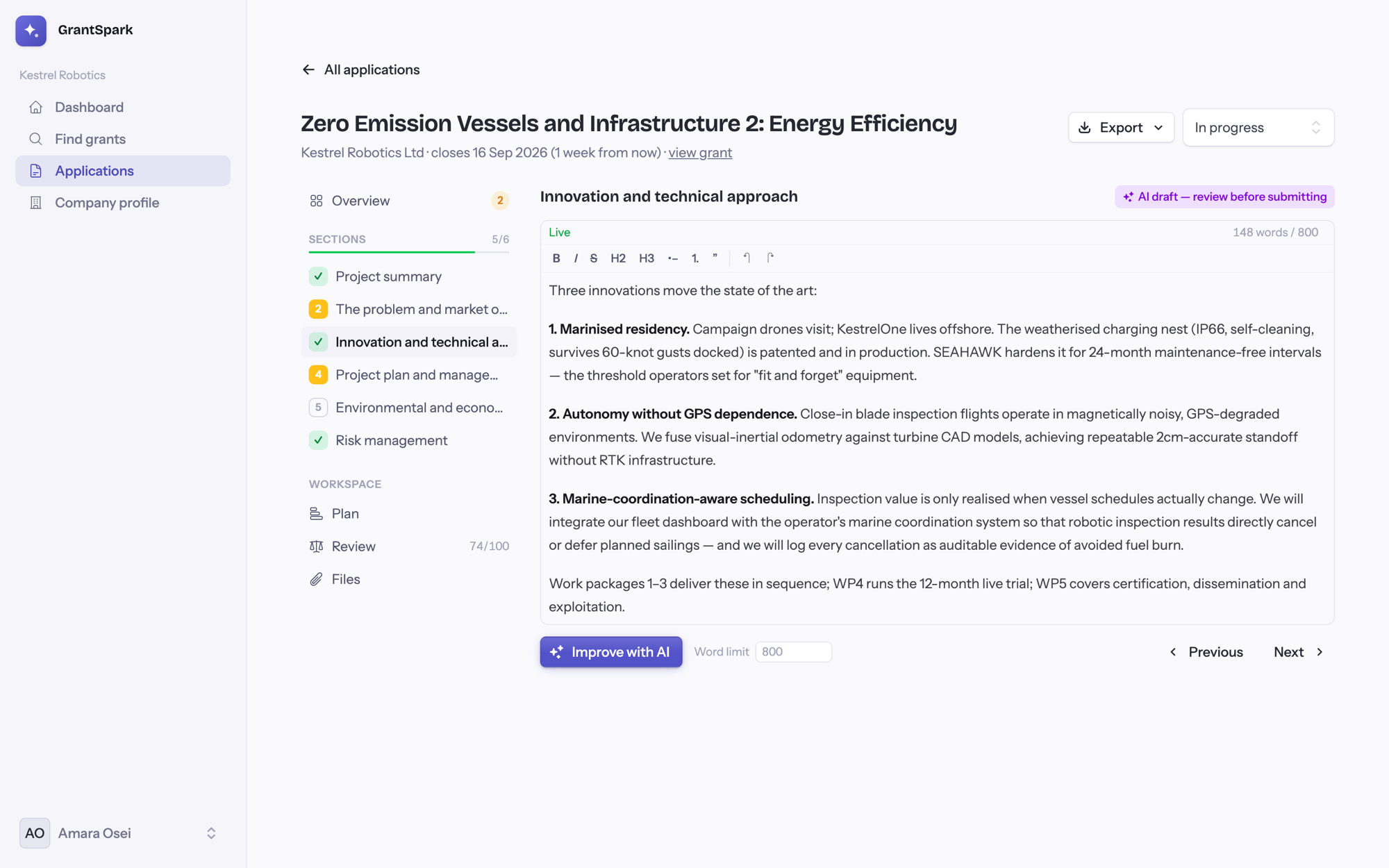
Before writing, AI reads the grant, the funder's guidance, and your profile — then asks 3–5 questions that make the difference: market size with citations, the named partner leading a work package, your pricing logic. Often it cites the funder's own scored questions.
Drafts draw on your company profile, uploaded documents (pitch decks, annual reports, past bids — scanned PDFs get transcribed automatically), and the funder's imported guidance. Missing facts become [placeholders], never inventions.
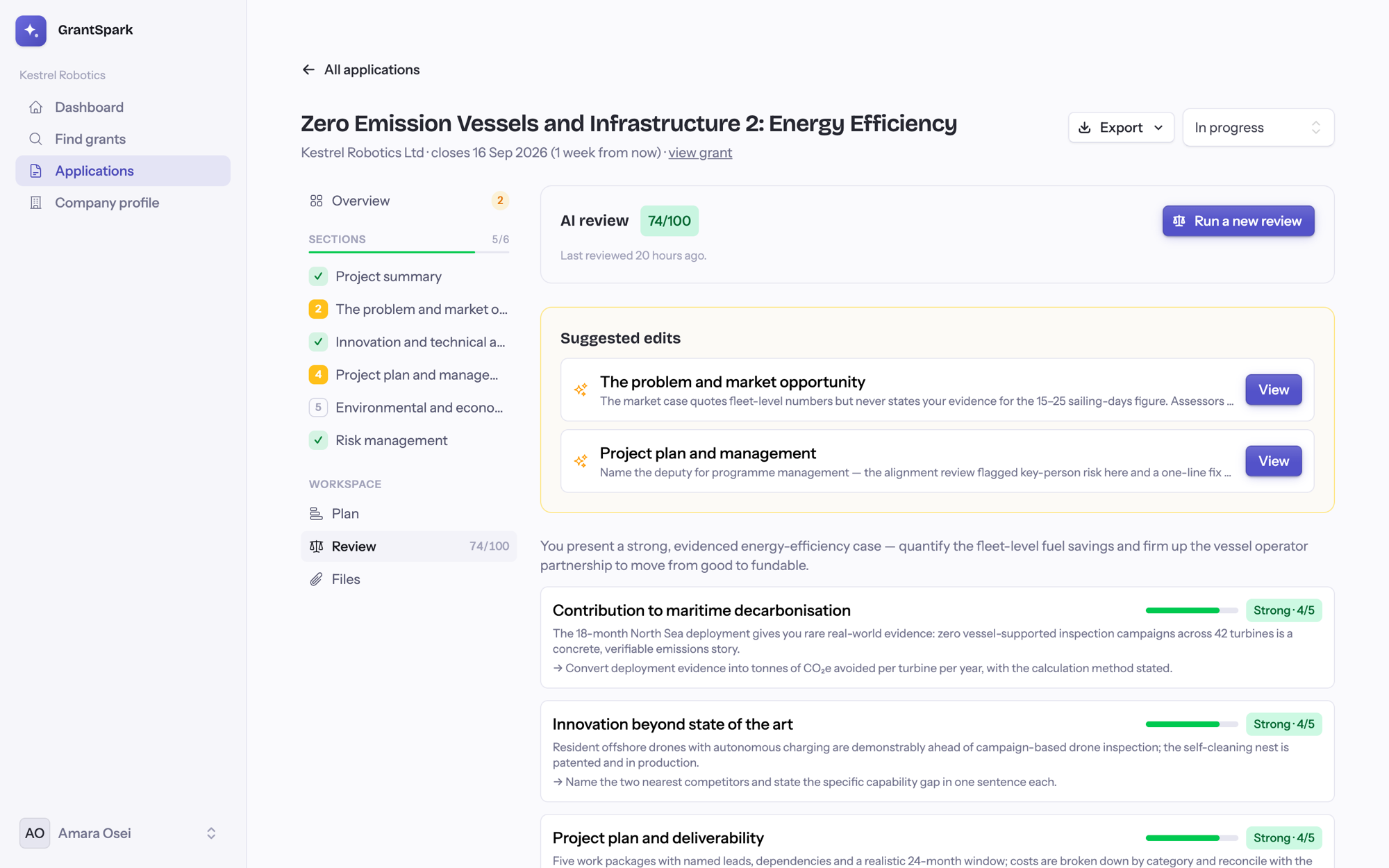
The AI review scores your application against an assessor-style rubric — switching to the funder's own criteria when their guidance defines them — names hard blockers, and proposes full rewrites for the weakest sections. Accept or dismiss each one.
Real-time collaborative editing with live cursors and team roles. Word limits are tracked as you type; funder-stated limits are detected automatically when sections are generated.
The pre-flight check counts every leftover [placeholder], flags over-limit sections, unresolved suggestions and review blockers — and only offers "Mark as submitted" when everything passes.
Word or Markdown output with every section formatted, plus your delivery plan: work packages, costs by category, milestones, and a month-grid timeline table.
Free to start. Point GrantSpark at your website and see your scored matches in minutes.
Get started free